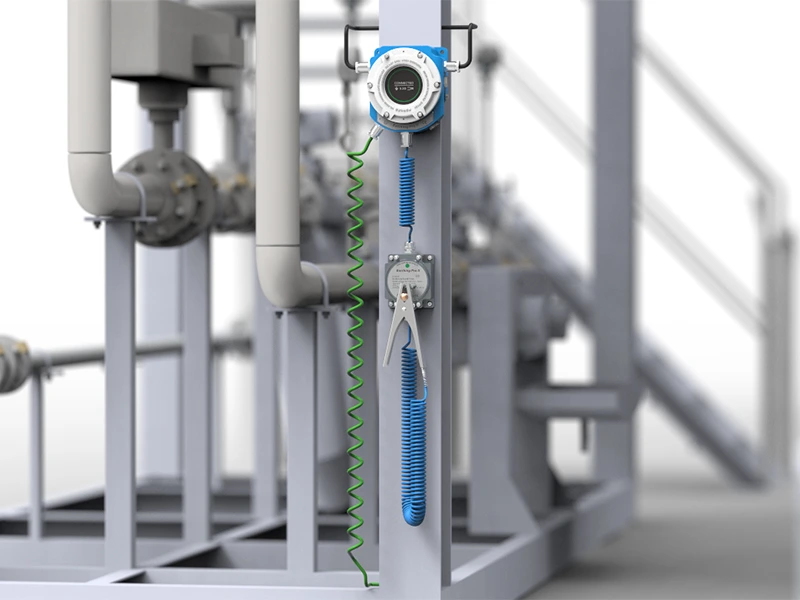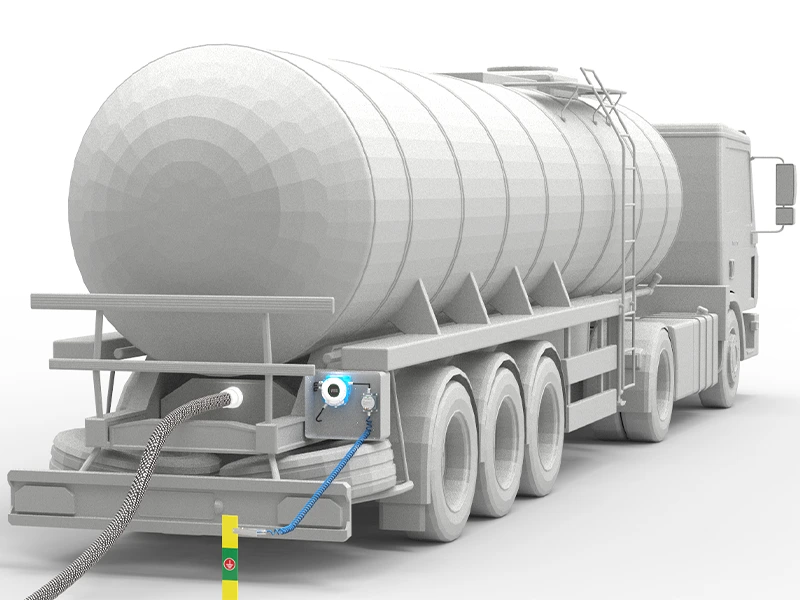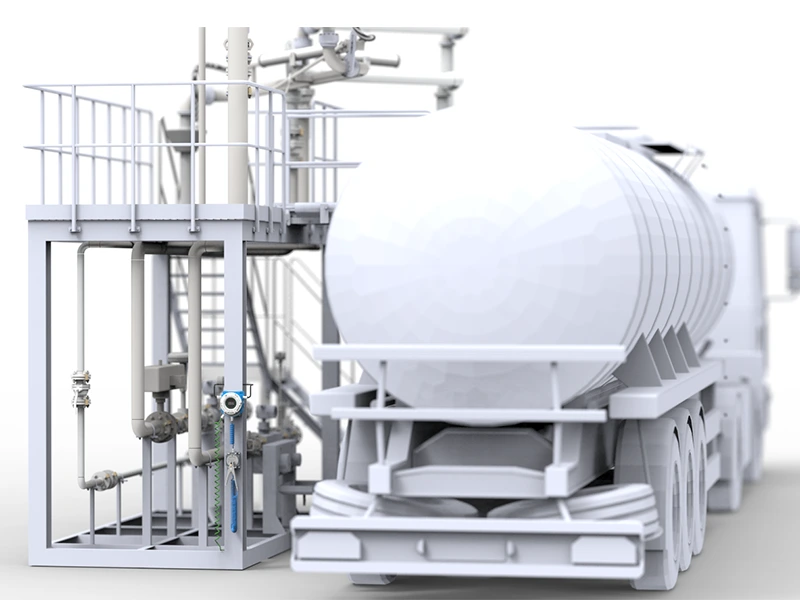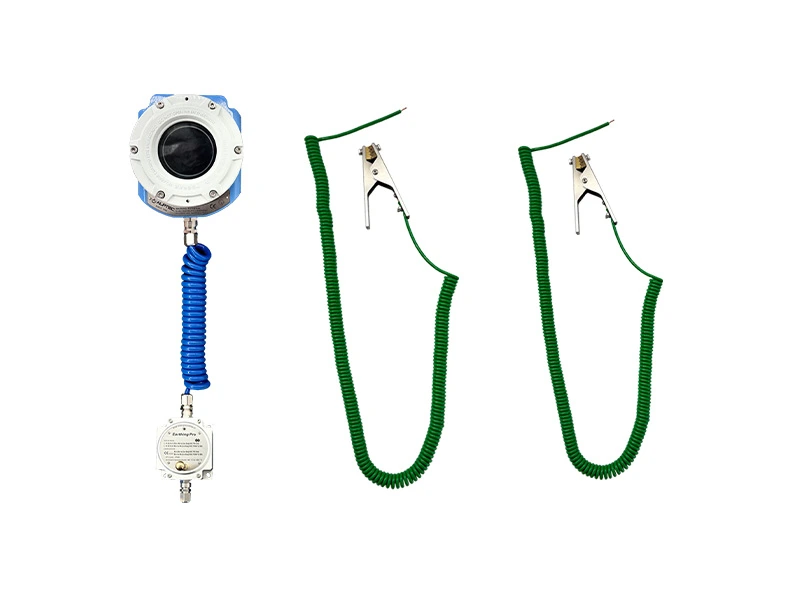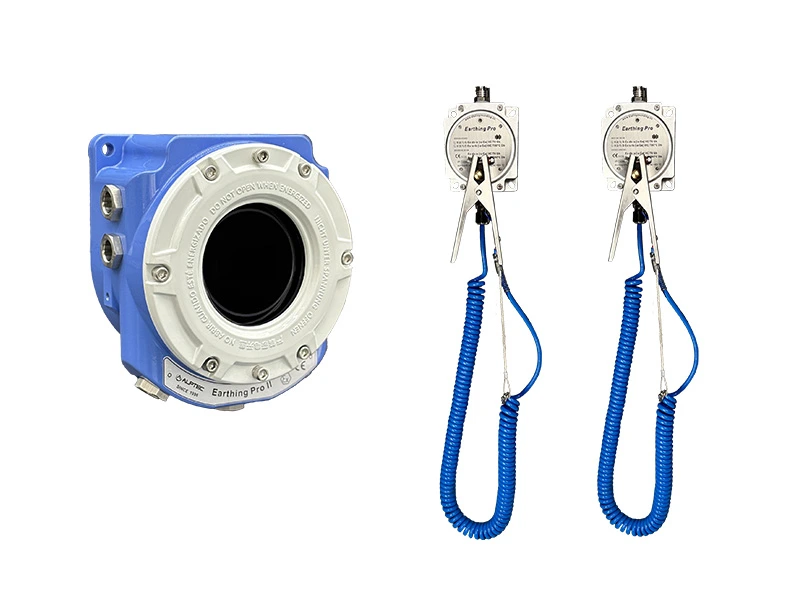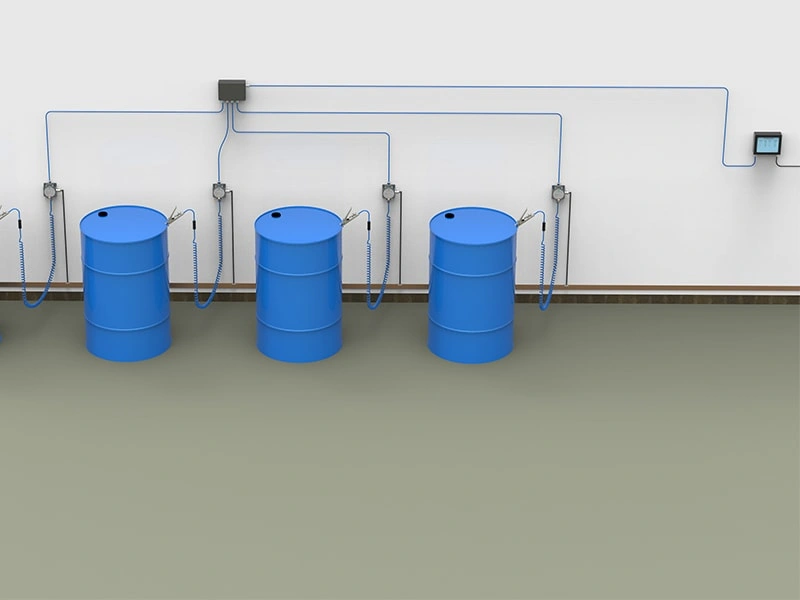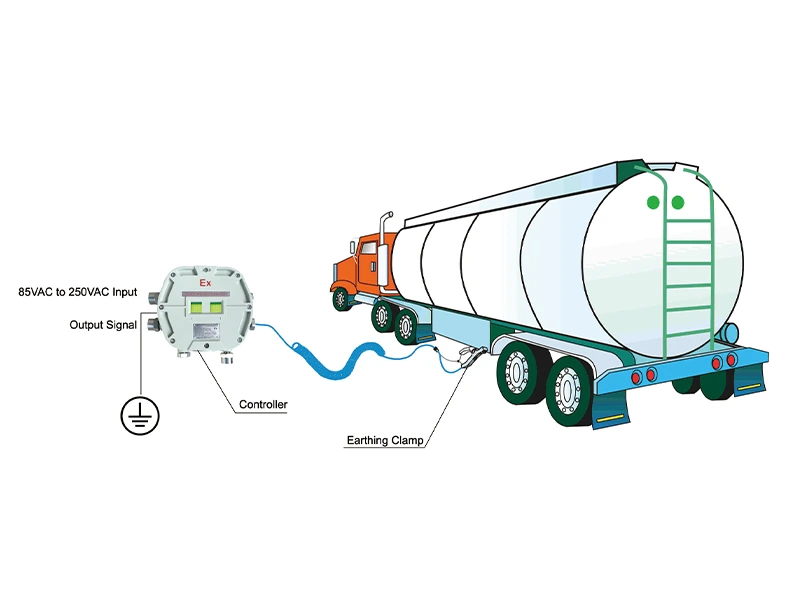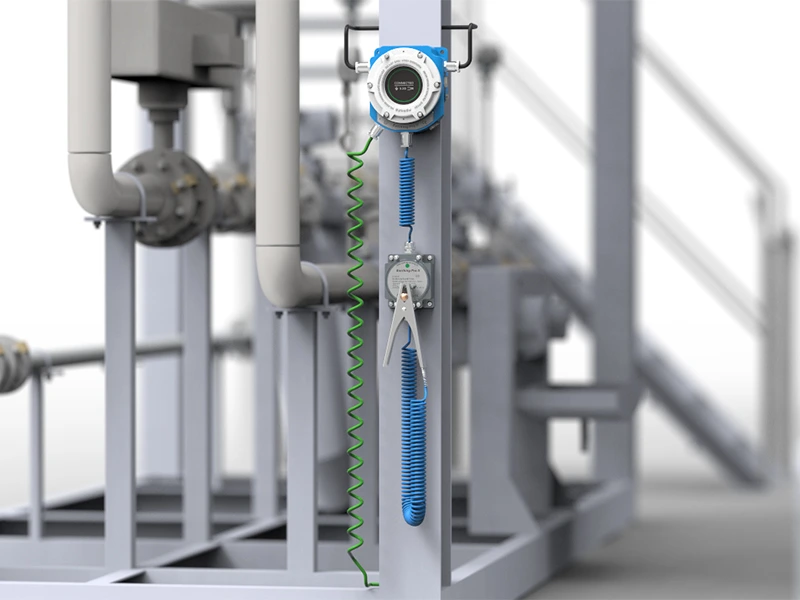
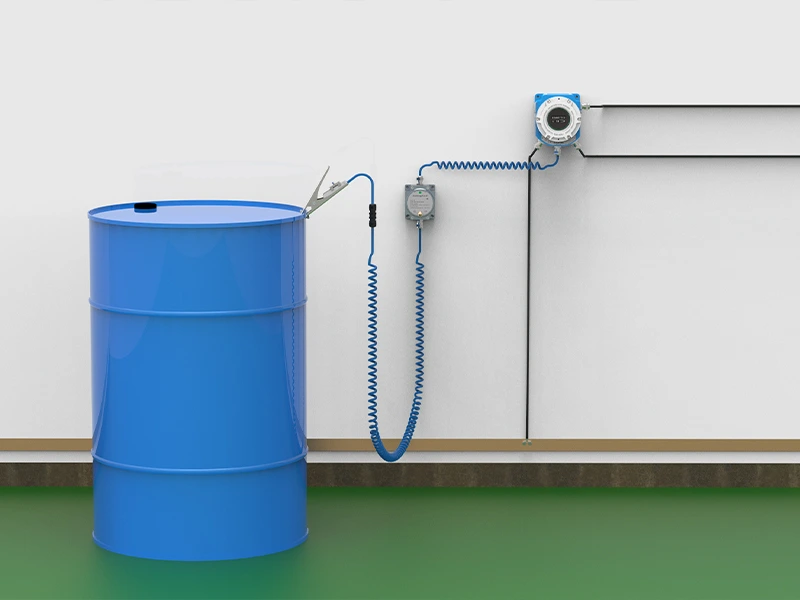
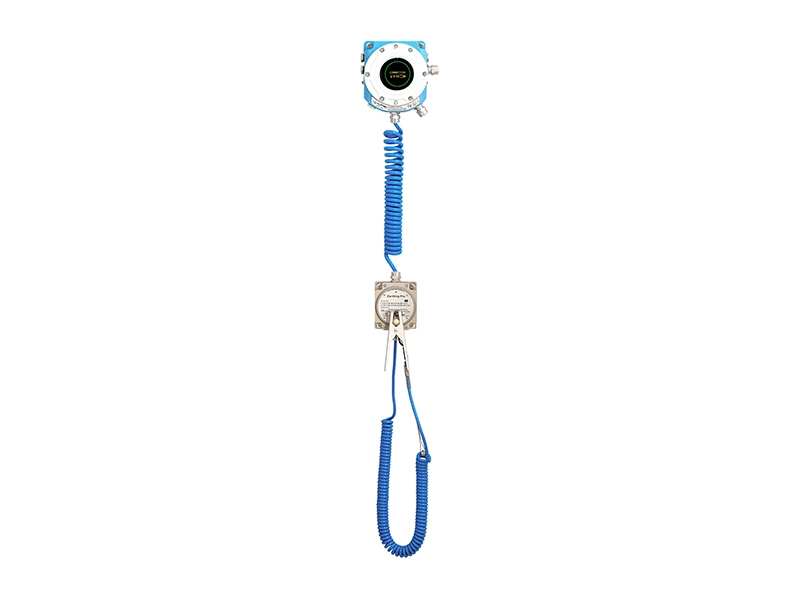


A static grounding verification system for tanker loading, drum filling and hazardous liquid transfer, designed to confirm true grounding status and support interlock control.
Earthing Pro GE is designed for static grounding control during hazardous liquid and bulk-material loading and unloading operations.
It verifies the clamp connection and continuously supervises the complete path from the connected conductive object to the designated site grounding point.
It is suitable for tanker trucks, railcars, metal drums, metal totes, metering skids and the metal frames of Ex IBCs where electrostatic control is required.
In hazardous areas, visible metal contact does not always mean true grounding is established.
Paint, corrosion, grease or insulated components may create a false grounding path.
Earthing Pro GE helps confirm grounding safety before operation begins and reduces the risk of static ignition.
True grounding verification, complete grounding-loop verification to ≤10 Ω.
Clamp connection detection, clamp-return monitoring with audible and visual reminder, audible and visual permissive/non-permissive indication.
Grounding loop status monitoring, continuous resistance and status display on the OLED.
Interlock output, one standard relay output with up to three outputs available.
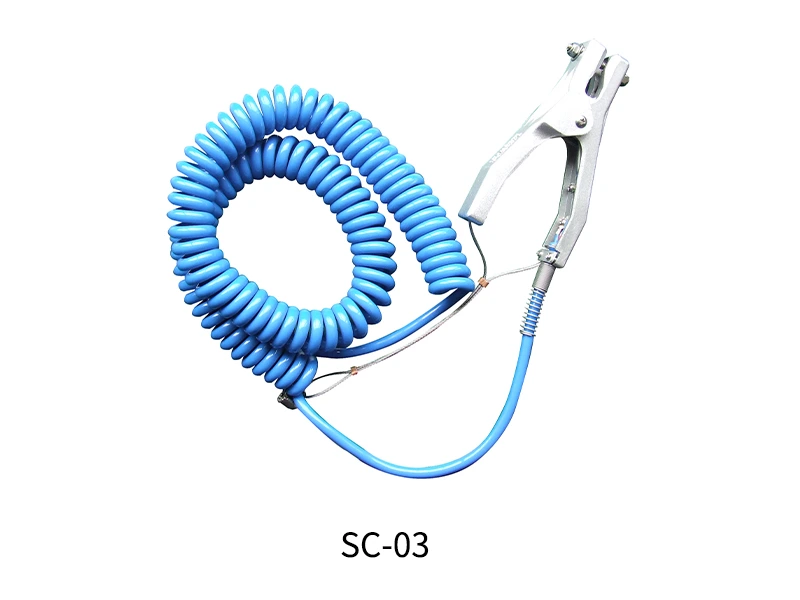
304 stainless-steel clamps with tungsten-carbide contact pins, suitable for tanker and drum applications.
Reliable for industrial operation, factory calibration with no routine customer calibration.
Remove the clamp from its return position; the system checks the site grounding connection.
Connect the grounding clamp to the tanker, drum or other conductive equipment.
The system checks the connection status and verifies the grounding loop, the intrinsically safe monitoring signal verifies the complete object-to-site-ground loop to ≤10 Ω.
When grounding conditions are safe, the operation can continue, the OLED and indicator show the permissive state and the configured relay output changes state.
If grounding becomes unsafe, the resistance rises above the limit or the clamp is removed, the system alarms and returns the relay to the non-permissive state.
Keep the clamp connected until material movement has completely stopped, then return it to the monitored holder.
Tanker loading and unloading
Drum and small container filling
Hazardous liquid transfer
Chemical and petrochemical loading sites
Liquid handling in storage areas
Metal frames of Ex IBCs
Pump and metering skids
Conductive process equipment used in hazardous transfer areas
Reduces static ignition risk
Improves loading safety
Minimizes false grounding risks
Supports interlock control
Improves operational reliability
| Power Supply | 24–48 VDC or 85–250 VAC |
| Ground Loop Resistance Threshold | ≤10 Ω |
| Alarm Indication | Audible and visual alarm with OLED display |
| Interlock Output | NO/NC dry contact |
| Certification | II 2(1) G Ex db ia [ia Ga] IIC T6 Gb; II 2(1) D Ex ia tb [ia Da] IIIC T80°C Db |
| Clamp / Cable Configuration: Optional cable lengths available, including 5 m, 7 m, 10 m, 13 m and 15 m | |
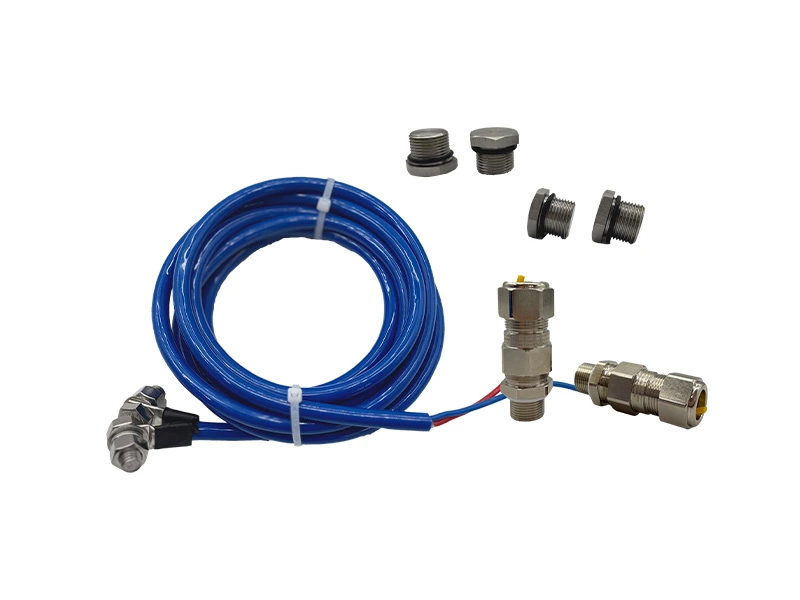
| Cable Gland Options: Ex armored and Ex non-armored cable glands available | |
| Monitoring Mode | continuous complete-loop monitoring while the clamp is connected |
| Standard Relay Outputs | 1; configurable maximum: 3 |
| Relay Contact Rating | 5 A at 30 VDC / 10 A at 250 VAC |
| Operating Temperature | -40°C to +60°C; |
| Ingress Protection | IP66 |
Note: Equipment configuration may vary slightly depending on the model and application requirements.
It is used for static grounding verification in tanker loading, drum filling and hazardous liquid transfer operations.
Because metal contact alone does not always mean true grounding is established, and false grounding may occur on site.
Yes. Earthing Pro GE can provide interlock output for integration with pumps, valves or control systems.
GE verifies the complete low-resistance path from the clamp contact on the conductive object to the designated site grounding point. A clamp that is merely closed is not enough.
In standby, the red indicator is on and the OLED is dormant. Removing the clamp starts the grounding check. The screen then progresses through GROUNDING OK and CLAMP ON. A valid connection displays CONNECTED together with the measured resistance and a green indicator. After removal, CLAMP OFF and ENTERING STANDBY guide the operator to return the clamp.
Use the specified tungsten-carbide contact pins on a suitable contact point and inspect the connection area. The monitoring result does not remove the need for routine clamp and surface maintenance.
No. It is calibrated before shipment. Commissioning and functional checks are still required after installation and during maintenance.
Copyright © 2026 by Qingdao Alptec Automation Co.,Ltd. All Rights Reserved
PRIVACY POLICY