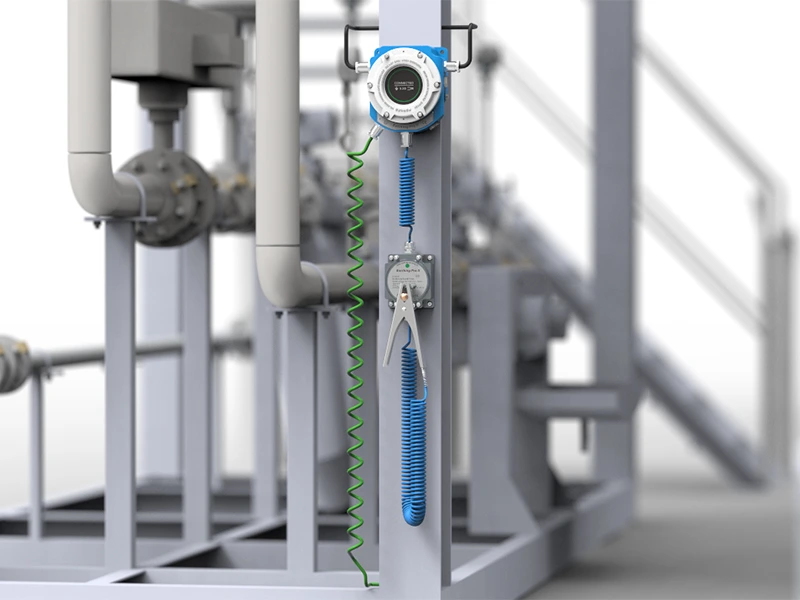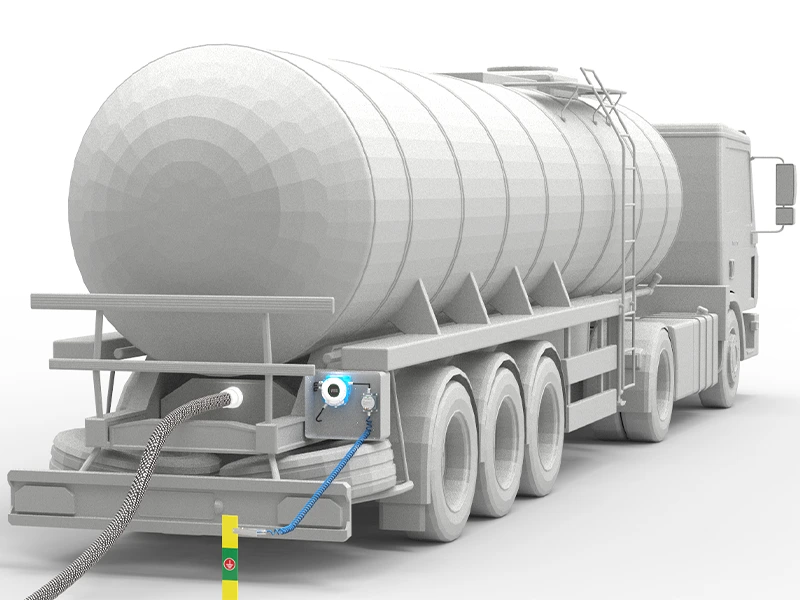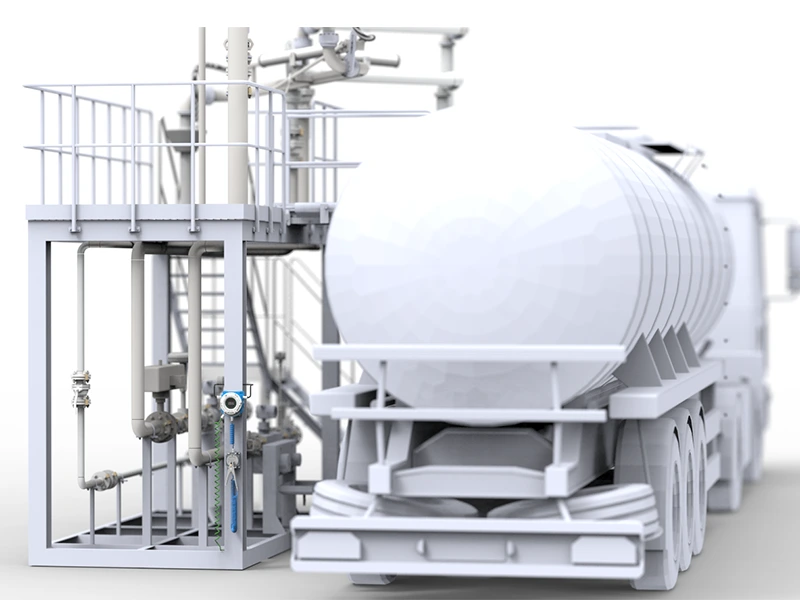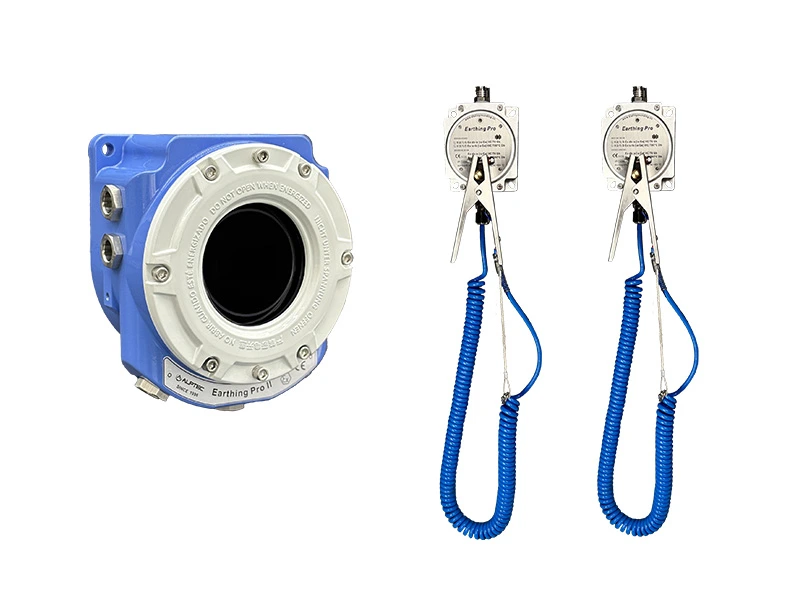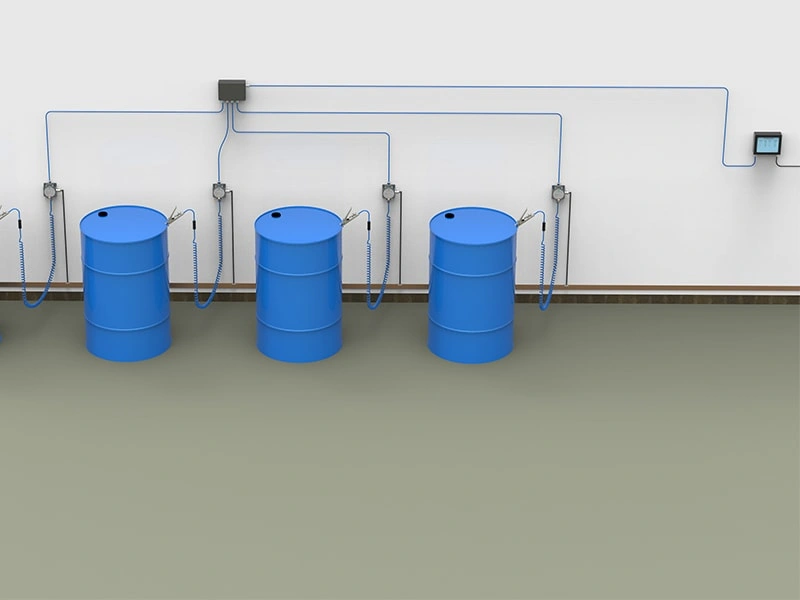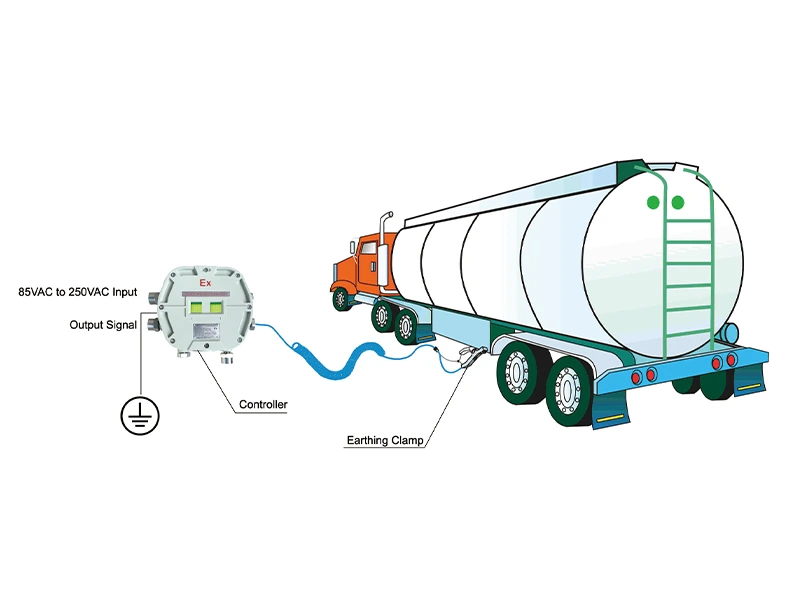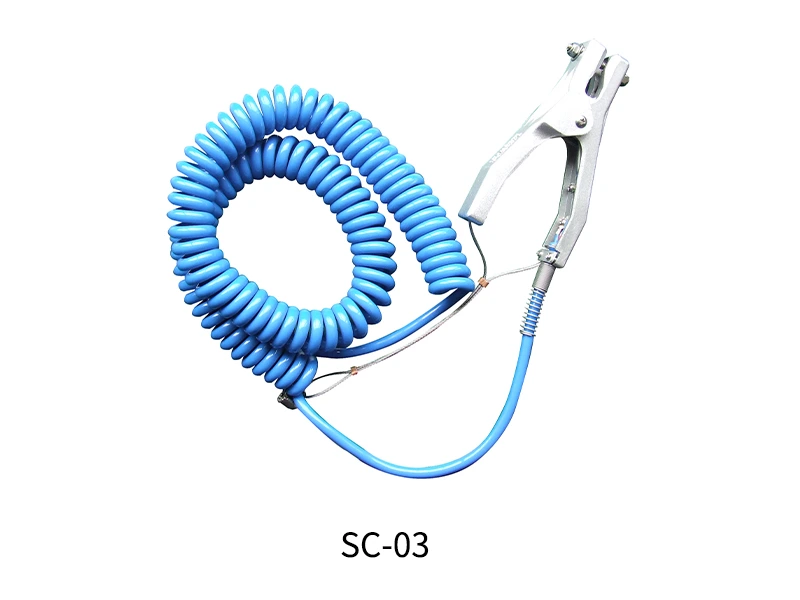


A static grounding verification system for FIBC filling, discharging and bulk powder handling operations, designed to confirm true grounding status and help reduce static buildup risks.
Earthing Pro FIBC is designed for static grounding control in FIBC filling, discharging and bulk powder handling operations.
It not only checks whether the grounding clamp is connected, but also verifies whether the grounding path is truly effective, helping reduce safety risks caused by static buildup.
It is suitable for chemical, powder, granule and other industrial applications where electrostatic control for FIBC handling is required.
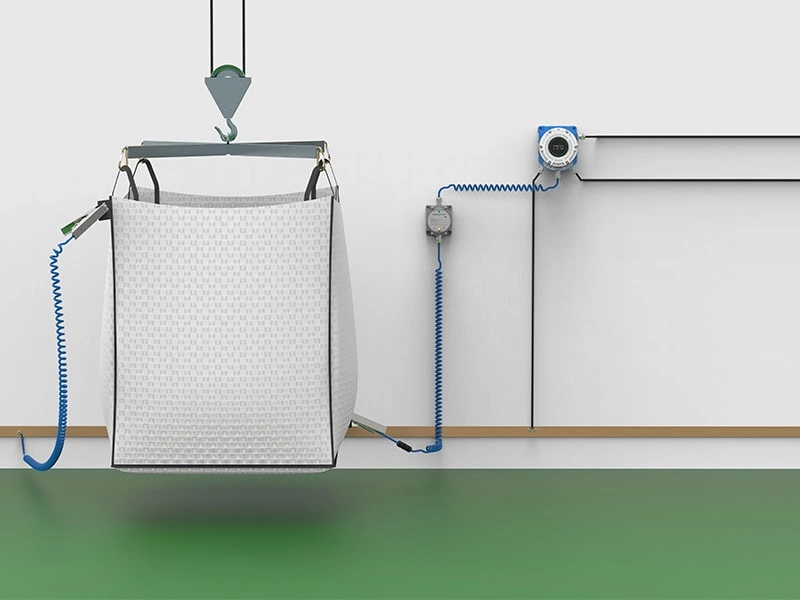
Checking only one grounding lug cannot confirm electrical continuity through the Type C bag. Earthing Pro FIBC uses two separate bag lugs so the monitoring signal passes through the conductive or static-dissipative structure before returning to the verified site ground. This confirms both the bag path and its earth connection during material handling.
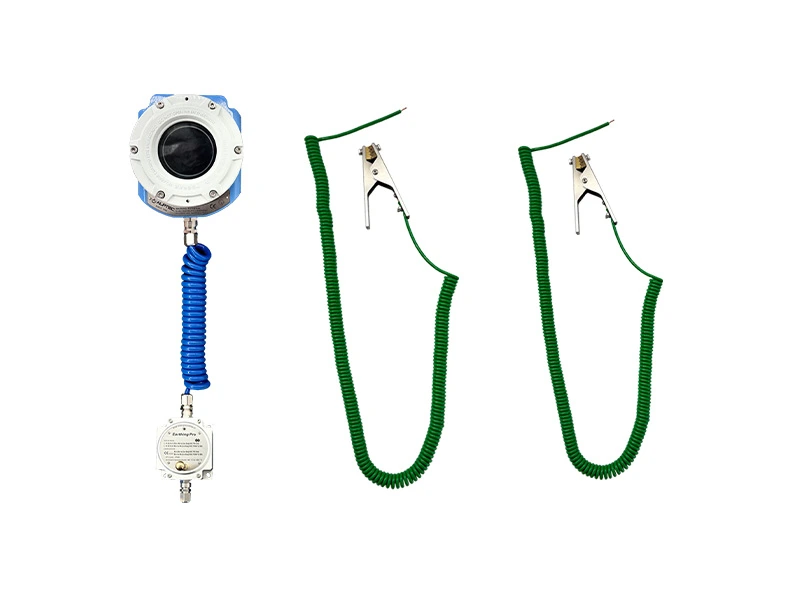
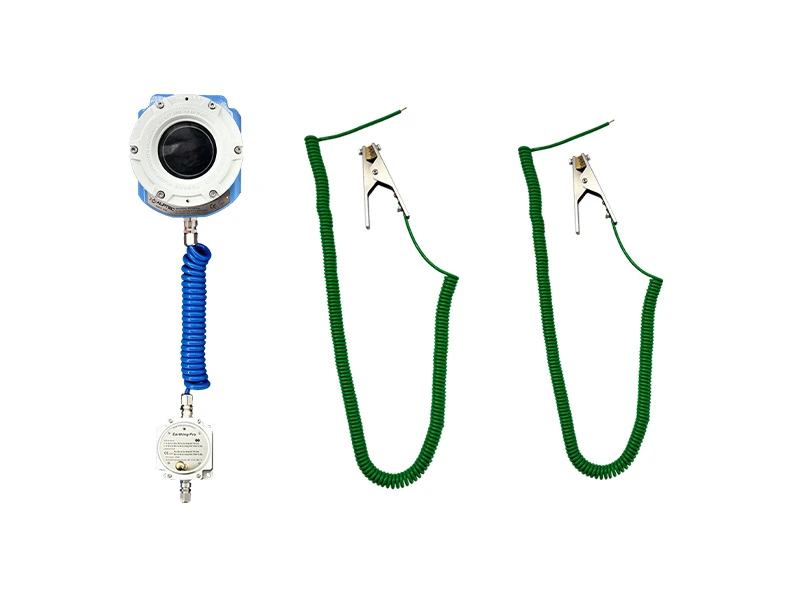
Connect one copper-tooth clamp as the grounding clamp between the verified site ground and one Type C bag lug.
Connect the identical monitoring clamp to a different designated lug on the bag.
Select ≤1×10⁸ Ω or ≤1×10⁷ Ω with the PCB DIP switch, or request a factory preset.
The system drives the monitoring signal through the bag structure and returns it through the grounding clamp.
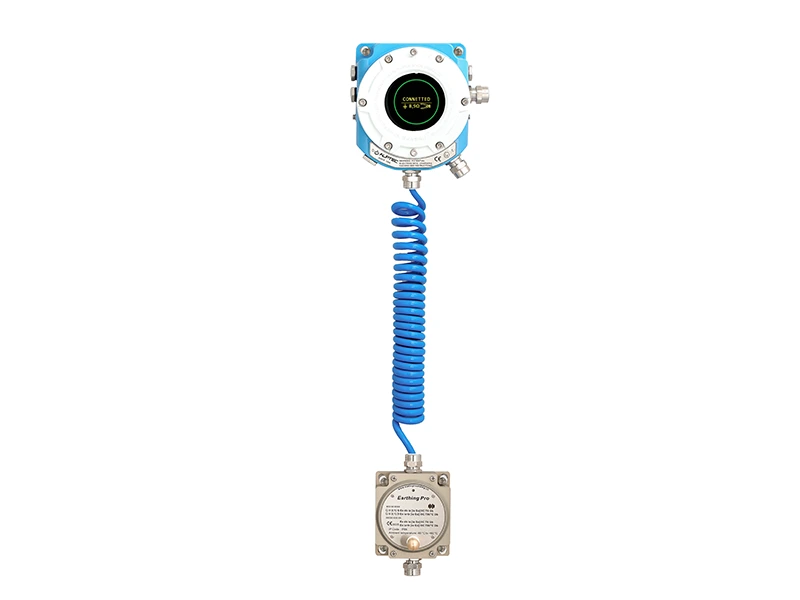
The OLED, alarm and relay become permissive only while the complete path remains within the selected limit.
Keep both clamps attached until material movement and the required charge-relaxation period have ended.
FIBC filling and discharging
Bulk powder handling
Granule material transfer
Chemical and powder processing sites
Packaging operations requiring electrostatic control
Type C FIBC filling and discharge
Powder and granule transfer
Chemical, pharmaceutical and food-ingredient handling
Packaging processes requiring continuous Type C bag grounding supervision
Reduces electrostatic risks in FIBC and powder operations
Improves filling and discharging safety
Minimizes false grounding risks
Supports interlock control
Improves operational reliability
Reduces electrostatic risks in FIBC and powder operations
Improves filling and discharging safety
Minimizes false grounding risks
Supports interlock control
Improves operational reliability
| Power Supply | 24–48 VDC or 85–250 VAC |
| Ground Loop Resistance Threshold | ≤10 Ω |
| Alarm Indication | Audible and visual alarm with OLED display |
| Interlock Output | NO/NC dry contact |
| Certification | II 2(1) G Ex db ia [ia Ga] IIC T6 Gb; II 2(1) D Ex ia tb [ia Da] IIIC T80°C Db |
| Clamp / Cable Configuration: Optional cable lengths available, including 5 m, 7 m, 10 m, 13 m and 15 m | |
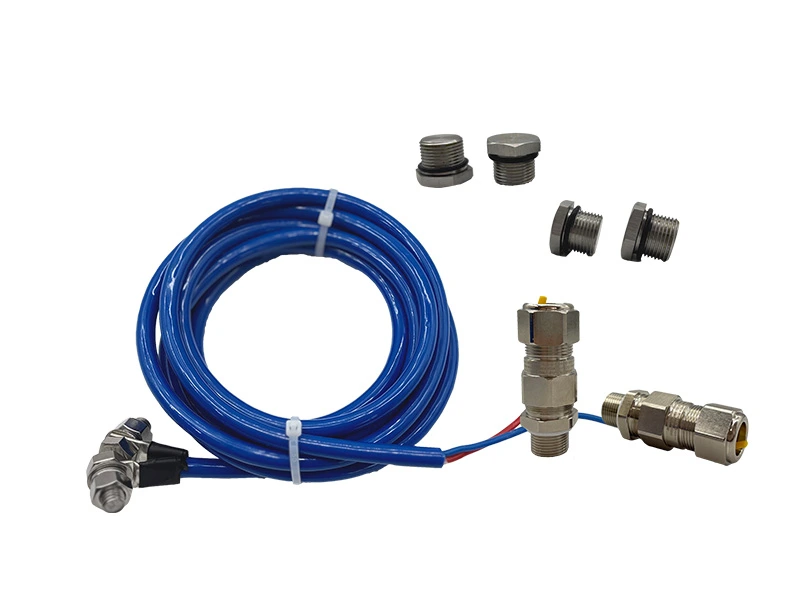
| Cable Gland Options: Ex armored and Ex non-armored cable glands available | |
| Supported Bag Type | Type C FIBC |
| Clamp Arrangement | 2 identical copper-tooth clamps on separate bag grounding lugs |
| Standard Relay Outputs | 1; configurable maximum: 3 |
| Relay Contact Rating | 5 A at 30 VDC / 10 A at 250 VAC |
| Operating Temperature | -40°C to +60°C; |
| Ingress Protection | IP66 |
Note: Equipment configuration may vary slightly depending on the model and application requirements.
It is used for static grounding verification in FIBC filling, discharging and bulk powder handling operations.
Because powders and granular materials can easily generate static electricity during handling, and insufficient grounding may increase safety risks.
Yes. Earthing Pro FIBC can provide interlock output for integration with filling, discharging or control systems.
One clamp provides the verified ground connection and the other injects the monitoring signal at a different bag lug. This makes the measured path pass through the Type C bag structure instead of checking only one local contact.
Choose ≤1×10⁸ Ω or ≤1×10⁷ Ω with the PCB DIP switch, or request factory presetting before shipment.
The two identical clamps use copper contact teeth designed to grip and protect the designated grounding lugs during normal use.
No. The monitor supervises the bag during use; the bag itself remains subject to the applicable IEC 61340-4-4 qualification and test requirements.
Copyright © 2026 by Qingdao Alptec Automation Co.,Ltd. All Rights Reserved
PRIVACY POLICY